
Composite Deck Repair in Minneapolis, MN
One cracked board or a row of raised fasteners does not always call for a new deck. It might be a simple repair, or the first visible sign of a problem underneath.
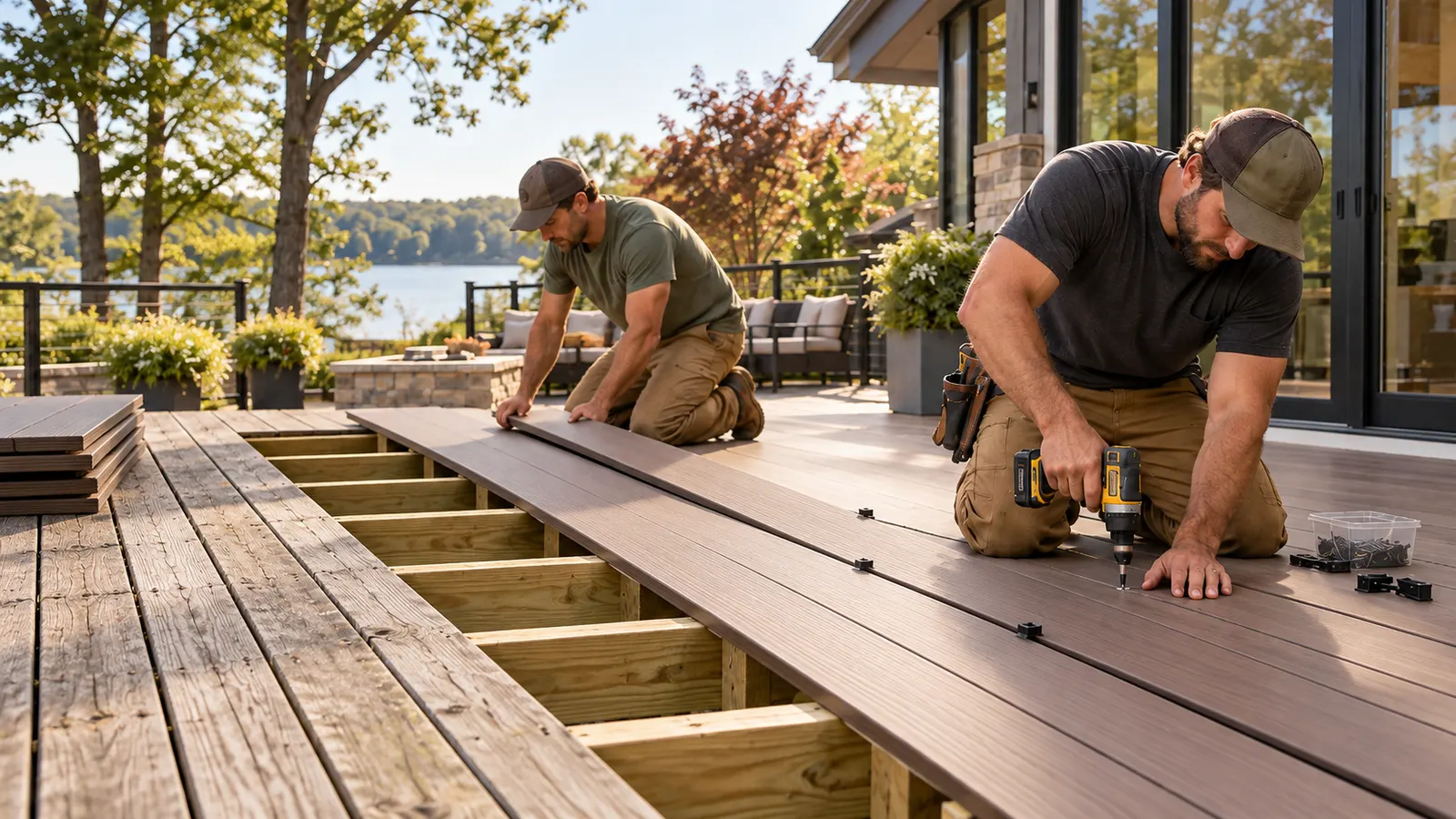
What repair covers, and where it stops
Repair means fixing a specific, limited problem: replacing a damaged board, resetting fasteners, fixing a loose stair tread, or tightening a rail connection. The rest of the deck stays as it is.
It is different from resurfacing, which replaces all the boards, and from replacement, which rebuilds the structure. The job of a repair assessment is to tell which of the three you actually need, and sometimes the answer is that a repair would be a waste of money.
Common repair situations
Each of these has a simple cause and a not-so-simple one. Diagnosis separates them.
- 1
A single damaged or stained board
Could be a one-off impact, or a sign of water or movement in that spot. The replacement board may not match older, faded boards exactly.
- 2
Raised or popped fasteners
May be loose screws, boards that were fastened too tight, or movement in the framing below.
- 3
Boards that have cupped, warped, or pulled apart
Can come from moisture, poor ventilation, or installation gaps that did not allow for expansion.
- 4
A soft spot or sag
Composite boards themselves do not rot like wood, so a soft spot often means the joist or support below has a problem.
- 5
A stair tread or riser that has loosened
Stair parts take heavy use, and a loose tread may reflect failing stringer connections.
Minnesota factors in deck repair
Freeze-thaw cycles and moisture are the usual culprits behind loosened fasteners and shifting. As temperatures swing, boards and framing move, and connections that were tight can work loose.
Standing water, packed snow, and debris in the board gaps keep moisture against the deck. If the same spot keeps failing, drainage and airflow are worth a look.
Some repairs may involve structure, and structural work can trigger permit requirements. Check with the City of Minneapolis before assuming that a repair is exempt.
Repair decisions and limits
These are the questions that decide whether a repair is practical.
- Board availability and matching
- Manufacturers change colors and discontinue lines. A replacement board may not match weathered boards, and a close match is not always available.
- Product compatibility
- Boards, clips, and fasteners are designed as a system. Replacement parts should match the original product and instructions.
- Cause before cure
- Replacing a board without finding why it failed means doing the job twice. The support below gets checked first.
- Fastener problems
- Raised screws or broken clips should be replaced properly, and the underlying movement understood.
- When repair stops making sense
- Widespread damage, a failing frame, or a pattern of recurring failures usually mean resurfacing or replacement is more reasonable.
How a repair is assessed
- 01
Describe the problem
Where it is, how long it has been there, and whether it is getting worse.
- 02
Inspect the area and the support below
Look at fasteners, framing, drainage, and nearby boards.
- 03
Decide: repair or step up
Confirm that a repair will hold, or recommend resurfacing or replacement.
- 04
Fix and check
Complete the repair and look at the surrounding deck for related issues.
What affects repair cost
Small jobs can have large unknowns, since the cause may not be visible from the top.
For a realistic figure on your project, call (612) 493-1492.
- Number of boards or parts affected
- Whether a matching board is available
- Access to the damaged area, including from underneath
- Framing or fastener repairs needed
- Stairs and railing involvement
- Whether a permit applies
Composite Deck Repair questions
Can you replace one composite board?
Usually, if the product is still available. Color and weathering differences can make a new board stand out.
Why do screws keep popping up?
It can be a fastening problem, boards installed without proper gaps, or movement in the joists. Find the cause before re-fastening.
Is a spongy spot in composite decking a board problem?
Often it points to what is under the board, like a damaged joist or a missing support, rather than the board itself.
When should I replace instead of repair?
When damage is widespread, the frame is questionable, or the same problems keep returning. An assessment can tell you which applies.
Can I fix a loose railing myself?
Tightening a visible fastener may help, but a rail that moves usually has a connection problem that deserves a proper look. See railing installation.
Related decking services
Back to composite deck installation in Minneapolis or all decking services.
See the Minneapolis neighborhoods we build in, or read how Everlast Decks approaches a deck project.
Sources and further reading
Permit, footing, and guard requirements change. Confirm current rules with the City of Minneapolis.