
Trex Deck Resurfacing in Minneapolis, MN
The boards are splintered and gray, but the deck still feels solid. Resurfacing sounds like the sensible fix, as long as the part you cannot see is as good as the part you can.
What resurfacing is, and is not
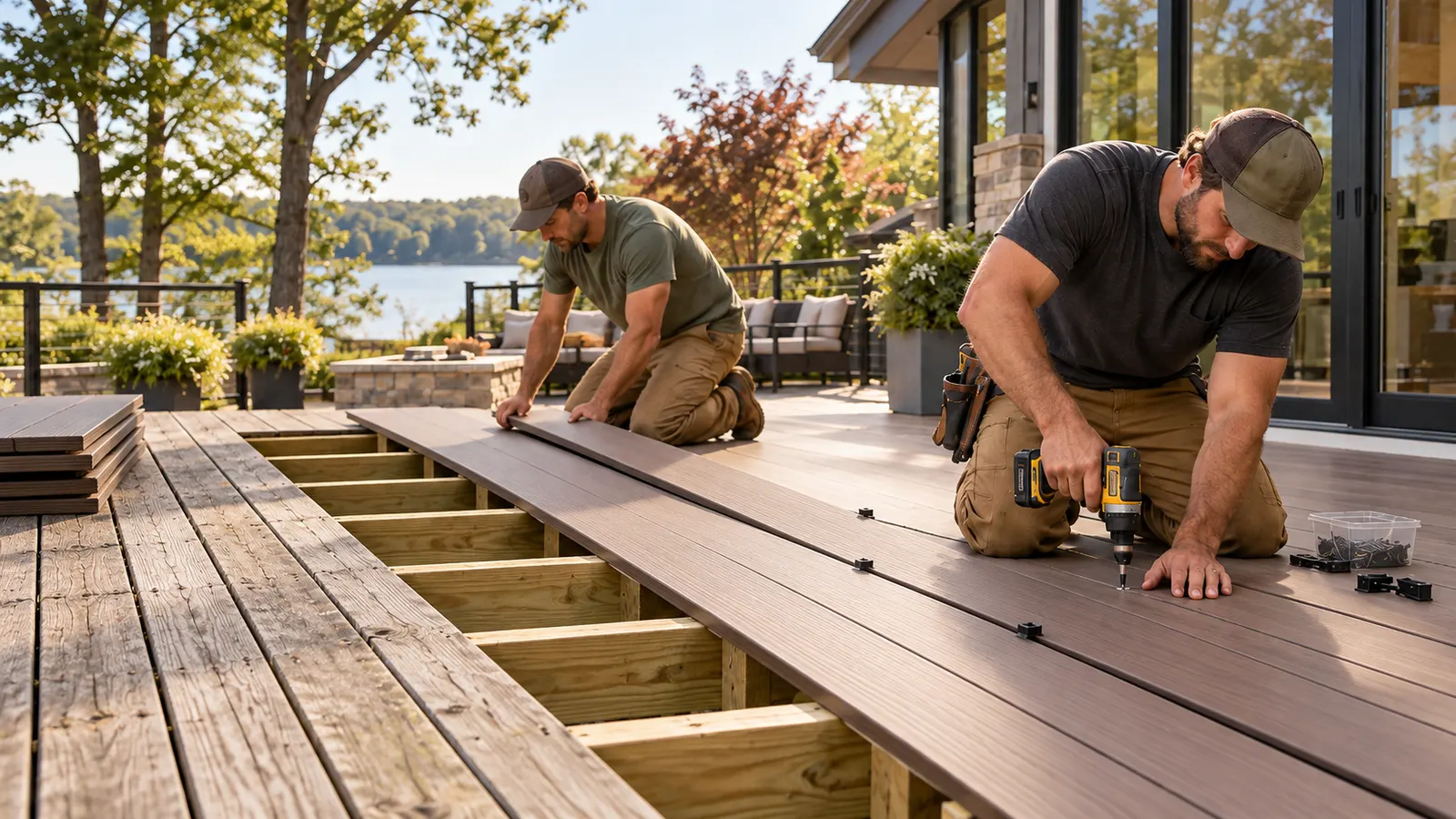
Resurfacing means removing the old decking and installing new Trex or composite boards on the existing frame. The posts, beams, joists, footings, and ledger stay in place, and so does any problem they have.
It is not replacement, which rebuilds the structure, and it is not repair, which fixes isolated damage. If the frame turns out not to be suitable, the project becomes replacement, and it is better to find that out before the new boards are bought.
When resurfacing may be worth considering
Each of these points toward resurfacing, if the inspection backs it up.
- 1
Boards are worn, but joists look straight and solid
If the surface is the failing part and the structure is not, replacing boards can make sense.
- 2
The deck layout still works
Resurfacing keeps the existing size and shape. If you want a different footprint, see custom composite deck building.
- 3
Footings and posts show no movement
Level surfaces and plumb posts suggest the foundation is doing its job.
- 4
The ledger and flashing check out
Where the deck meets the house is inspected, since hidden moisture damage often starts here.
- 5
Railings and stairs are separate decisions
These often wear faster than the boards and may need work of their own.
Why Minnesota winters make the frame check important
Years of freeze and thaw and trapped moisture can weaken joists and hardware without changing how the boards look. Rot tends to start where water sits, on joist tops under boards and around fasteners and connections.
Footings can shift with frost over time. A deck that has moved a little can still be fine to resurface, but it should be measured, not guessed at.
A visual look from the yard cannot establish that a frame is safe. Plan on the boards coming off before anyone commits to resurfacing, because that is when the joists and connections can actually be checked.
Technical decisions on a resurfacing job
These are where resurfacing is more than a swap of boards.
- Joist condition and spacing
- Composite has its own spacing limits. If existing joists are spaced for wood decking, added joists or blocking may be needed.
- Protecting the joist tops
- Joist tops take the worst of the water. Protective tape or other measures may be recommended by the board manufacturer, so check the product's instructions.
- Fasteners and hardware
- Old hangers and connectors are inspected, and corroded ones are replaced.
- Fascia and edge treatment
- Existing trim often has to come off, and new fascia hides the frame's edges.
- Code at the time of the work
- A permit may apply, and old stairs and guards may need to be brought up to current requirements. Check with the City of Minneapolis.
How resurfacing is evaluated and done
- 01
Describe the deck and its problems
Age, size, height, and what you have noticed.
- 02
Remove boards and inspect the frame
Check joists, beams, posts, footings, connections, and ledger.
- 03
Decide: resurface or rebuild
If the frame is sound, proceed with resurfacing. If not, scope the rebuild.
- 04
Install new boards and finish
Lay boards, adjust framing as needed, and complete trim and review.
What affects resurfacing cost
Resurfacing usually involves less structure than a rebuild, with less certainty about the structure that remains.
For a realistic figure on your project, call (612) 493-1492.
- Square footage of decking
- Added framing for the new board spacing
- Repairs found once boards are removed
- Board line and color
- Fascia, stairs, and railings
- Permit requirements
Trex Deck Resurfacing questions
Is resurfacing cheaper than replacement?
It often costs less, since the structure is kept, but there is no guarantee. Repairs found under the boards can narrow or erase the difference.
How old can a frame be and still be resurfaced?
Age alone does not decide it. Condition does, which is why the frame is inspected after the boards come off.
Can you tell from the yard whether my deck can be resurfaced?
Not reliably. A visual check can raise concerns but cannot establish that a frame is sound.
Do I still need a permit?
Possibly. Requirements depend on the scope and the deck, so check current City of Minneapolis guidance before work begins.
Will resurfacing fix a bouncy deck?
No. New boards do not correct undersized or loose framing. Bounce points to a structural issue that needs its own evaluation.
Related decking services
Back to composite deck installation in Minneapolis or all decking services.
See the Minneapolis neighborhoods we build in, or read how Everlast Decks approaches a deck project.
Sources and further reading
- City of Minneapolis — Decks and Building Permits for 1 & 2 Family Dwellings (PDF)
- Minnesota Department of Labor and Industry — Residential Decks and the Minnesota Residential Code (PDF)
- Trex Decking Installation Guide (confirm you are reading the current edition for your product)
Permit, footing, and guard requirements change. Confirm current rules with the City of Minneapolis.